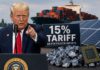
The Trump administration has put forward a proposal to impose a 25% tariff on imports from Brazil, citing what it describes as unfair and restrictive trade practices by the South American country. This proposal is the result of an investigation carried out under Section 301 of the U.S. Trade Act of 1974. In response, Brazilian President Luiz Inácio Lula da Silva has voiced his disapproval, warning that Brazil might implement countermeasures if these tariffs are enacted. The Brazilian government has conveyed its willingness to continue engaging in dialogue with U.S. officials in hopes of averting new trade obstacles.
U.S. trade statistics indicate that the United States had a goods trade surplus of over $14 billion with Brazil in 2024. During this period, U.S. exports to Brazil rose to $54.4 billion, while Brazilian exports to the U.S. decreased to $39.9 billion. Additionally, the U.S. maintained a substantial surplus in services trade with Brazil, illustrating a complex interdependency between the two economies that could be affected by the proposed tariffs.
The proposed tariffs notably exclude several key Brazilian exports, such as aircraft and certain critical minerals, reflecting a selective approach that targets specific sectors rather than a blanket imposition. A public hearing to discuss the tariff proposal is scheduled for July 6, providing a platform for stakeholders to express their views and possibly influence the final decision.
President Lula has emphasized that should access to the U.S. market become more challenging, Brazil will actively seek alternative trading partners. This stance underscores Brazil’s strategic diversification in its trade relationships, with China currently being its largest trading partner and a vital market for Brazilian exports. Lula’s statement highlights Brazil’s preparedness to pivot its economic focus if necessary, reflecting the broader dynamics of global trade where nations continuously adapt to shifting policies and alliances.