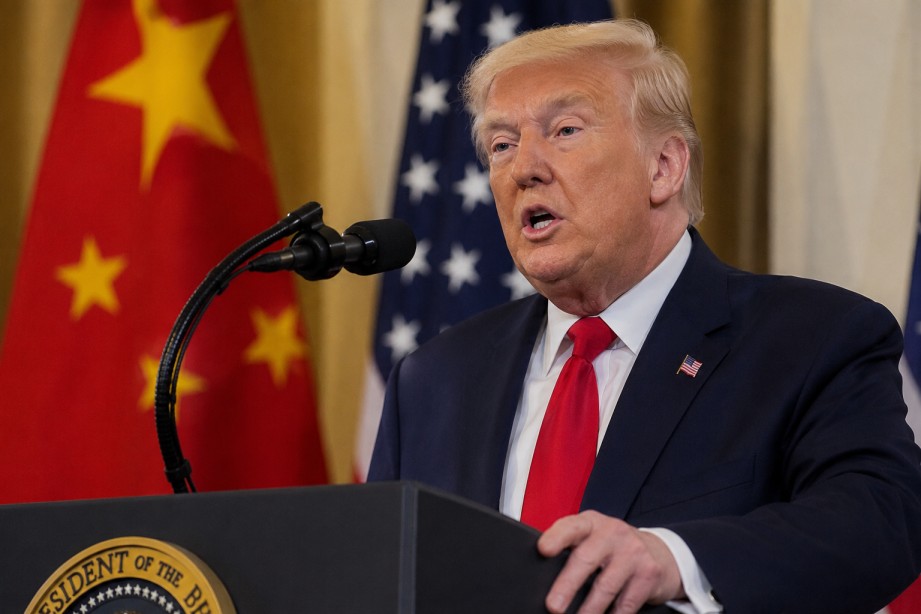
In a recent announcement, US President Donald Trump has once again brought forward allegations against China, asserting that the nation interfered in the 2020 US presidential election. He has called for the declassification of intelligence documents and directed federal agencies to probe what he describes as concealed vulnerabilities in election security. During a televised speech, Trump expressed concerns about the public’s trust in the US electoral system and urged key federal departments like the Department of Justice, FBI, CIA, and the Office of the Director of National Intelligence to examine how intelligence related to the 2020 election was managed. He further called on Congress to enact stricter voter identification laws.
Democratic leaders have been quick to dismiss these allegations, pointing to a series of investigations, intelligence reports, court decisions, audits, and recounts that have consistently shown no evidence of foreign interference affecting the election’s outcome. Critics have suggested that Trump’s actions might be aimed at eroding public confidence in the electoral process, especially with the congressional midterm elections on the horizon.
China has also responded to these claims, firmly rejecting the accusations and reaffirming its policy of non-interference in the domestic affairs of other nations. A US intelligence evaluation released in 2021 supported this stance, indicating that no foreign power, including China, had manipulated the technical aspects of the 2020 US voting system.
The renewed focus on election security comes amid a broader context of political tension, with Trump’s allegations potentially influencing public perception and discourse as the country gears up for the midterm elections. This development has sparked a wider debate about election integrity and the role of foreign entities in US politics, with various stakeholders weighing in on the implications of such claims.