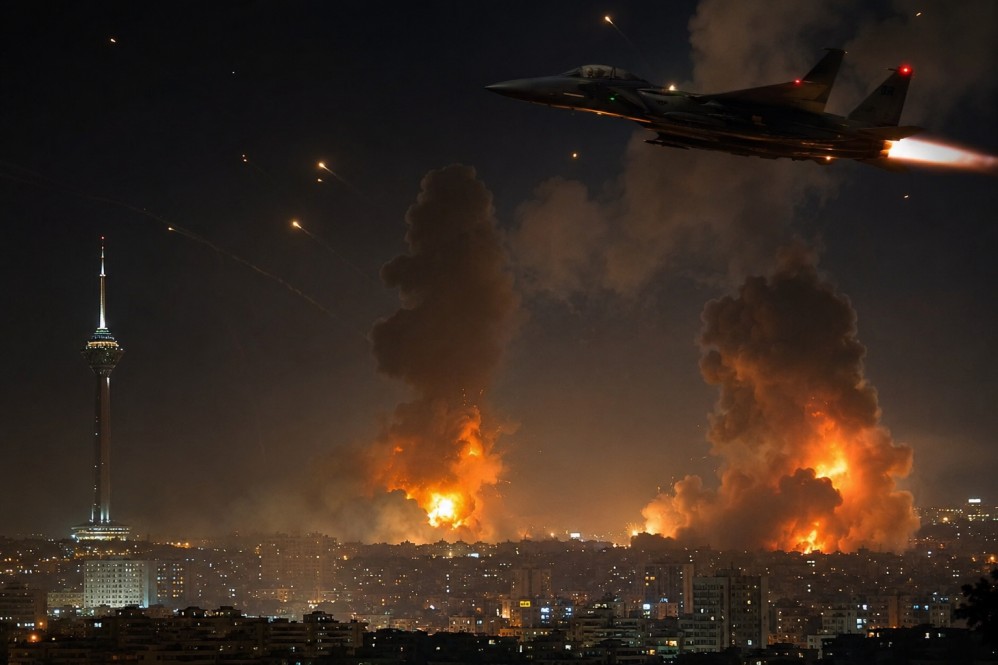
In a significant escalation of military operations, the United States has launched airstrikes on Iran for the third night in a row. President Donald Trump has announced plans to impose a maritime blockade on Iran and intends to levy a 20% tariff on cargo passing through the Strait of Hormuz, an area under the security oversight of the US. This move is part of a broader strategy to diminish Iran’s military capabilities and safeguard commercial shipping and civilian safety in this vital waterway, according to the US Central Command. Trump has emphasized the continuation of military actions against Iran, asserting that the US will maintain its security control over the strait.
The recent developments arise in the wake of reported attacks on two oil tankers from the United Arab Emirates, which were allegedly hit by Iranian cruise missiles in Omani waters. The incident resulted in the death of an Indian crew member and left several others injured. This spike in regional tensions has led to a nearly 8% increase in Brent crude oil prices, heightening concerns about global energy supply stability.
In response, Iran has strongly denounced the proposed maritime blockade, accusing the United States of endangering international energy security. Iranian officials have warned of a robust response should there be any attempts to limit its maritime access. Additionally, international maritime authorities have raised legal concerns, stating that imposing mandatory transit fees in international waterways lacks any legal justification under current international law.
The intensifying situation has fueled fears of a broader regional conflict. Ongoing attacks have not only disrupted shipping routes but also driven up oil prices, contributing to growing uncertainty in the global economy. The strategic Strait of Hormuz remains a focal point of geopolitical tensions, with the potential for further military escalation posing significant risks to the stability of international trade and energy markets.