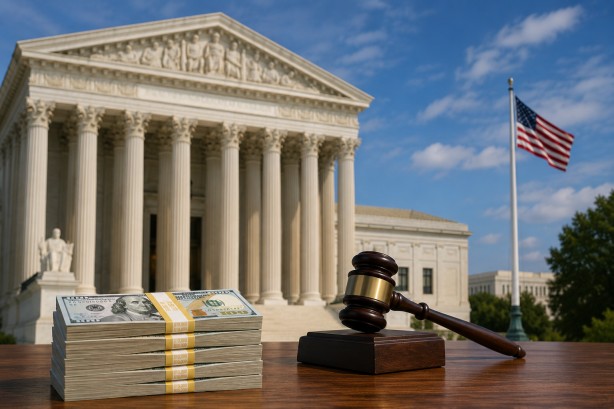
In an unprecedented financial reversal, the U.S. government has refunded $81 billion in tariffs to American businesses following a Supreme Court decision that deemed a substantial portion of former President Donald Trump’s tariff policies illegal. This refund marks a significant increase compared to the $5 billion disbursed during the same period last year. The court’s ruling necessitated reimbursement to companies that had previously paid these import duties, and the bulk of these refunds were processed in May and June, as indicated by Treasury budget reports.
The consequences of the refunds have been felt in the federal budget, contributing to a swelling deficit that has reached $1.367 trillion within the first nine months of the fiscal year. Compounding the financial strain are rising interest payments on the national debt and increased expenditures on military operations. These factors together are placing considerable pressure on government finances as they strive to manage the economic impact of the refunds.
Despite the Supreme Court’s decision to invalidate the earlier tariffs, the Trump administration is reportedly planning to introduce a new series of tariffs. These forthcoming measures are aimed at addressing issues such as trade practices, industrial overcapacity, and the enforcement of anti-forced labor laws. The proposed tariffs are anticipated to range between 10% and 12.5%, with potential for additional duties directed at several key trading nations.
This development underscores ongoing tensions in international trade relations and the complex landscape of tariff policies. Businesses and trading partners are closely monitoring these evolving dynamics, as the implications of the new tariffs could have far-reaching effects on global trade patterns and economic ties. The administration’s approach to these issues will likely influence both domestic industries and international diplomatic relations in the coming months.