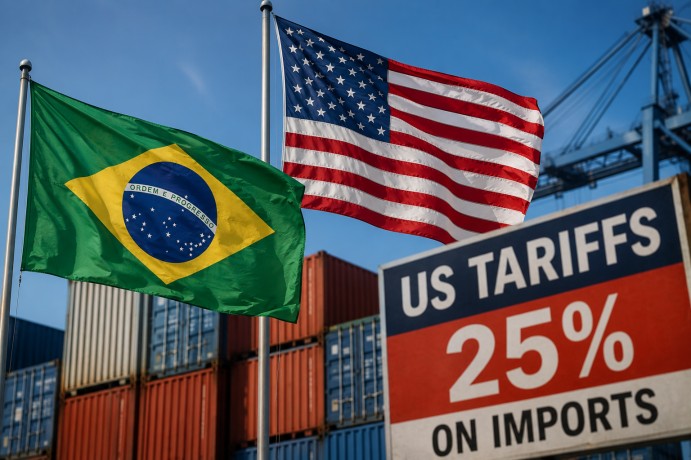
The Brazilian government has expressed strong disapproval of the United States’ recent decision to implement a 25% tariff on certain Brazilian goods starting July 22. Brazil has labeled the move as unwarranted and firmly denies any accusations of engaging in unfair trade practices. The announcement from the U.S. has sparked a rebuttal from Brazil, which insists that its trade activities are fair and that the tariffs are unjustified.
The imposed tariffs will affect a selection of Brazilian imports, although several key products such as coffee, beef, oranges, orange juice, specific oil and gas products, and aerospace components have been excluded from the list. This exemption aims to prevent any disruptions in the supply chain that these products might cause if included. Despite the tariffs, both nations have indicated a willingness to keep negotiations ongoing, as stated by the U.S. Trade Representative.
According to U.S. officials, the tariff decision stems from an investigation that concluded Brazil is involved in several unfair trade practices. These practices allegedly include inadequate enforcement of anti-corruption measures and trade policies deemed unreasonable by the U.S. government. The tariffs are intended to secure fair competition for American companies and workers, despite the pushback from Brazil, which continues to oppose the measure.
In a statement, U.S. Secretary of State Marco Rubio criticized Brazilian President Luiz Inácio Lula da Silva’s administration, claiming it has not engaged in good faith negotiations. Rubio further accused Brazil’s economic policies of harming both American and Brazilian interests. Despite these accusations, Brazil remains steadfast in rejecting the claims and is actively resisting the newly imposed tariffs.