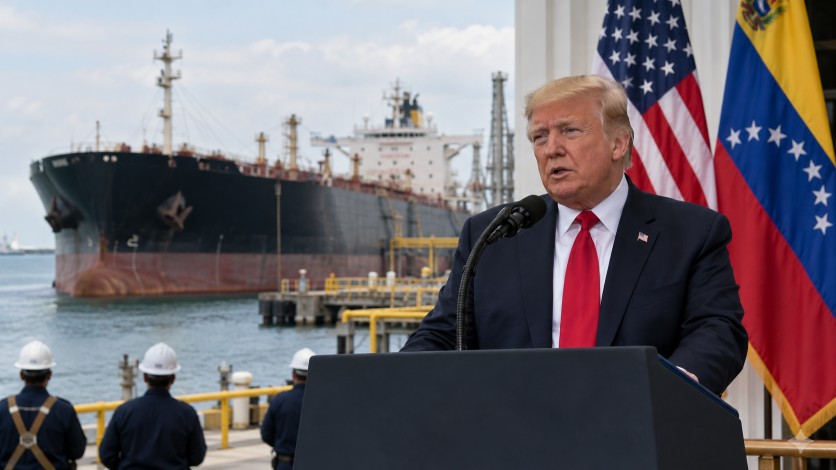
In a bold move highlighting its energy strategy, the Trump administration has unveiled a new oil agreement with Venezuela, which President Donald Trump described as a significant triumph for American energy policy. Speaking at a campaign rally in Corpus Christi, Texas, Trump announced that the agreement would bring billions of barrels of Venezuelan oil to the United States, with an oil tanker reportedly carrying one million barrels already off the Texas coast.
Trump hailed the deal as one of the greatest oil victories in history, emphasizing that the shipment would incur no cost to American taxpayers. Additionally, he floated the idea that Venezuela could eventually become the 51st state of the United States, suggesting that the South American nation could find prosperity under the new arrangement.
The agreement emerged following a US military operation in January that led to the capture of former Venezuelan President Nicolás Maduro, who was subsequently extradited to New York to face criminal charges. This move has drawn criticism, with detractors arguing that the US has prioritized access to Venezuelan oil over fostering a democratic transition in the country, which has not held elections since Maduro’s detention.
Amid rising domestic fuel prices due to tensions with Iran and disruptions in global oil supplies, Trump claims the deal will bolster US energy dominance and help mitigate these economic pressures. However, questions persist regarding the long-term impact on fuel prices and the political future of Venezuela.
The timing of this agreement is particularly significant as tensions involving Iran have led to disruptions in oil shipments through the Strait of Hormuz, a vital maritime corridor responsible for handling about one-fifth of the world’s oil supplies. These disruptions have further strained global energy prices, increasing the burden on consumers.
While Trump positions the Venezuelan oil agreement as a cornerstone of his energy policy, the arrangement continues to spark debate about its implications for both the US economy and the political landscape in Venezuela. The broader impact remains to be seen as the US balances its energy ambitions with geopolitical and ethical considerations.