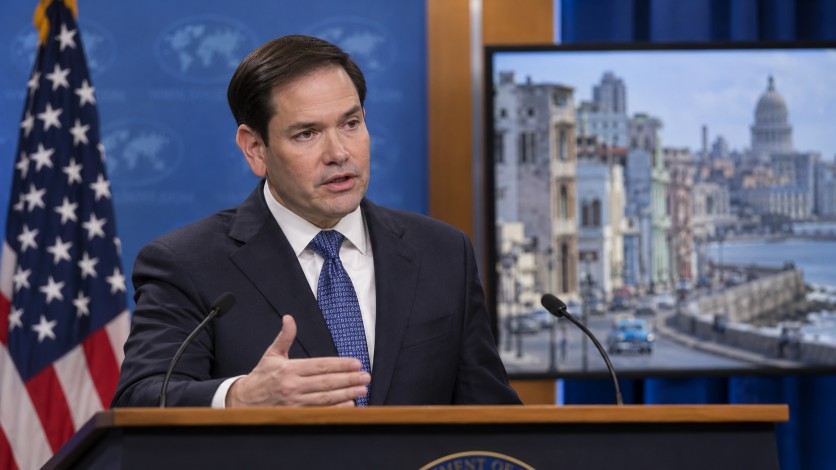
Amid ongoing tensions between the United States and Cuba, U.S. Secretary of State Marco Rubio has called on Cubans to strive for political change. His remarks come in the wake of President Donald Trump’s suggestion that U.S. warships could pass near Cuba while returning from conflict in Iran, a statement made during a political rally in Florida.
Rubio took to social media to encourage Cubans dissatisfied with corruption, economic hardships, and societal inequalities to seize the moment for change. Though he did not outline specific strategies, his message seemed to motivate Cubans to pursue reform. The backdrop to Rubio’s call includes growing public unrest in Cuba due to an economic and energy crisis, with citizens facing power outages, food shortages, and inflation.
Trump’s comments have reignited speculation regarding U.S. intentions towards the Cuban government, leading to criticism from Cuban officials. Cuba’s Deputy Foreign Minister Carlos Fernández de Cossío derided suggestions of potential cooperation with U.S. intelligence, accusing the U.S. of meddling in Cuba’s domestic affairs.
Rubio has been a long-time critic of Cuba’s socialist regime, pointing to the nation’s economic struggles and its alliances with U.S. adversaries. The Trump administration has maintained a stance of economic sanctions against Havana while occasionally expressing an interest in diplomatic negotiations. Despite some dialogue between U.S. and Cuban officials, relations remain tense, with Washington voicing concerns over Cuba’s security alliances and Havana opposing the U.S. economic embargo.
The situation in Cuba is exacerbated by a prolonged economic downturn, prompting public protests and a significant emigration wave. Rubio’s recent statements, in conjunction with Trump’s remarks, underscore continued U.S. scrutiny and pressure on Cuba amid these challenges. As the island nation grapples with its internal crises, the potential for political change remains a subject of speculation and debate.