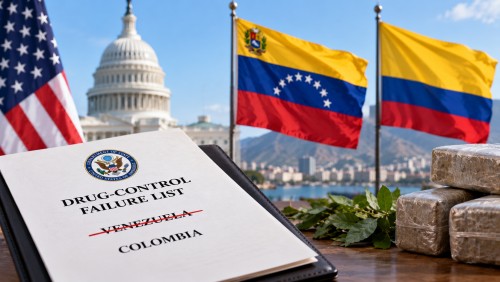
Amid ongoing efforts to enhance international cooperation against drug trafficking, the United States has adjusted its stance on Venezuela’s compliance with counternarcotics commitments. Previously listed among countries failing to meet these obligations, Venezuela has now been removed from this category. This decision reflects a broader U.S. strategy to engage Latin American nations in combating drug-related activities.
The change comes as the Trump administration acknowledged what it described as progress made by Venezuela under interim President Delcy Rodríguez in tackling drug-trafficking organizations. While Venezuela’s status has improved, the country remains classified as a significant drug-transit or illicit drug-producing nation for the fiscal year 2027.
In contrast, Colombia remains on the U.S. list of countries failing to meet international counternarcotics standards. The White House has identified Colombia as one of four nations that have not made substantial efforts over the past year to fulfill these commitments. However, President Trump indicated that Colombia might see a change in its status if it continues to enhance its efforts against coca cultivation, cocaine production, and drug-trafficking networks.
Colombian officials have expressed their commitment to addressing the drug trade comprehensively. Their strategy aims to dismantle the entire drug-trafficking chain by targeting illicit crops, production facilities, trafficking routes, criminal finances, and international networks.
The U.S. remains focused on fostering effective counternarcotics partnerships across Latin America, a region critical to global drug trafficking routes. While progress varies, the adjustments in Venezuela’s and Colombia’s statuses highlight the dynamic nature of international drug policy and the ongoing challenges in curbing the illegal drug trade.