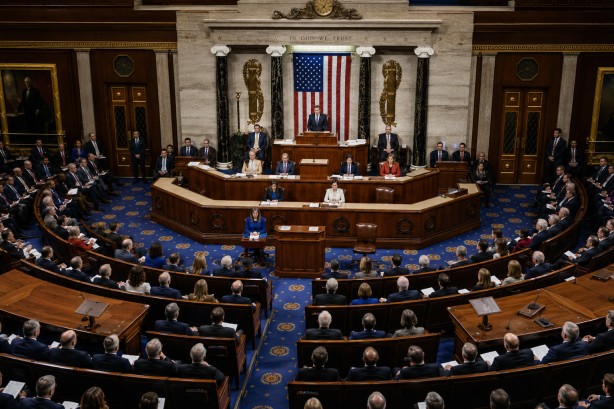
The U.S. House of Representatives has moved forward with a $1.15 trillion National Defense Authorization Act (NDAA), passing the measure with a vote of 216-212. The decision, which largely reflected party lines, propels the substantial defense spending package to the Senate for further consideration. A significant feature of the bill includes pay raises ranging from 5% to 7% for military personnel, alongside substantial investments intended to fortify the U.S. military’s capabilities.
Republican leaders advocate that this legislation is vital for modernizing the military and bolstering national defense. However, the measure faced opposition from most Democrats who criticize the defense budget as disproportionately large, especially when juxtaposed with cuts to other domestic programs. The bill’s advancement comes amid heightened political tensions, particularly concerning President Donald Trump’s unilateral military actions in Iran, which were conducted without prior approval from Congress. This has fueled concerns among some lawmakers over the potential for increased U.S. military activities in the Middle East.
The legislation also sparked debate due to the inclusion of voting-related measures championed by Trump. These provisions, which impose stricter ID requirements and curtail mail-in voting, have been contested by Democrats who argue that such policies should not be entwined with defense-related legislation. Additionally, the House faced intense discussions over amendments concerning transgender military policies and defense healthcare, though a proposed amendment to cease military aid to Ukraine was ultimately rejected.
In a separate development, House Republicans have approved a budget framework allocating $73 billion for military operations involving Iran. This figure, however, remains significantly lower than the broader budget proposed by the Pentagon for defense operations. As the NDAA progresses to the Senate, the debates and divisions it has sparked highlight the underlying complexities of balancing national defense needs with other legislative priorities and international commitments.