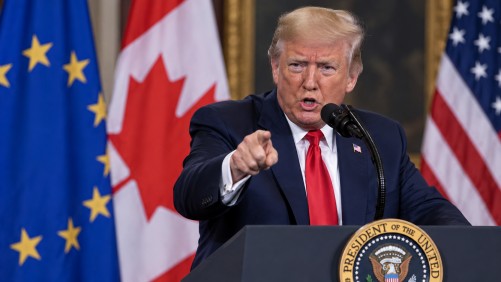
The European Union’s move to strengthen ties with Canada by proposing it as the bloc’s first “associate member” has stirred diplomatic tensions with the United States. US President Donald Trump criticized the initiative, branding it as “laughable” and suggesting it could lead to severe repercussions in transatlantic trade relations.
President Trump’s comments came in response to European Commission President Ursula von der Leyen’s invitation to Canada, which aims to enhance cooperation in key areas such as technology, defense, and energy. Von der Leyen emphasized the need for democracies to reinforce alliances amidst growing challenges to the international rules-based order. This proposal signifies a potential shift in global alignments as Canada seeks to diversify its defense partnerships beyond the US, including applying to join the British-led Joint Expeditionary Force.
Trump warned that the US might impose “very serious tariffs” on EU goods or reduce trade with the bloc, depending on the intentions behind the EU-Canada arrangement. His administration has already strained relations with both Canada and the EU by imposing tariffs on traditional trading partners since his return to the White House.
While Canada and the EU have existing trade agreements and bilateral arrangements, the proposed associate membership seeks to take their relationship beyond economic ties. Discussions are reportedly focusing on collaboration in defense industries, artificial intelligence, cybersecurity, energy, and Arctic cooperation. The details of this unprecedented membership are still under negotiation, as the EU currently lacks a formal associate membership framework.
The EU’s initiative reflects a broader strategic ambition to forge a comprehensive “alliance for the future” with Canada. This move could redefine the geopolitical landscape, particularly as both entities look to bolster their positions on the global stage amid shifting alliances and emerging challenges.