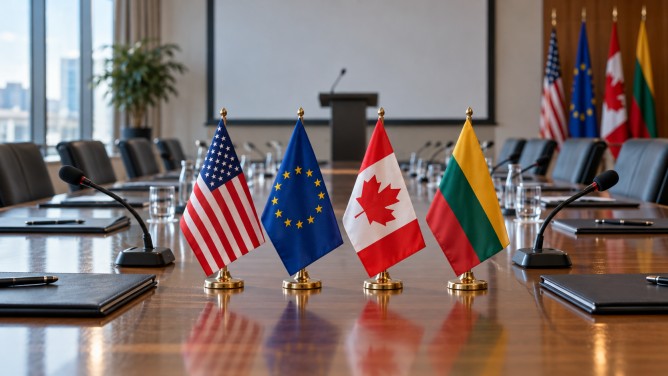
The upcoming #Disinfo2026 conference in Vilnius, Lithuania, has sparked controversy after the United States expressed concerns over its agenda, which includes a discussion on whether Washington itself could be a source of foreign information manipulation. This apprehension led to the withdrawal of official support from Lithuania, Canada, and the European Union, all of whom had initially backed the event.
Scheduled for October 7 and 8, the conference gathers researchers, journalists, technology experts, and policymakers to address issues of disinformation and information manipulation. However, the inclusion of a panel examining the United States as a potential threat has caused diplomatic ripples. Internal U.S. documents suggest that American officials welcomed Lithuania’s decision to step back from full participation, with the Lithuanian government asserting that certain program elements did not align with its official stance.
Canada also reevaluated its involvement, citing changes to the framing of several panel discussions as the reason. While Canadian officials continued to attend, the country’s Global Affairs department withdrew its official support. Similarly, the European External Action Service pulled back, although the EU continues to fund the conference, reflecting a nuanced stance on the issue.
The tension underscores differing views among Western allies about the boundaries of countering disinformation and the propriety of scrutinizing U.S. actions in international forums. Despite the withdrawals, France has maintained its support for the conference, emphasizing the importance of engaging with civil society to shape European policies on disinformation.
This situation highlights ongoing debates among Western governments regarding the definition of foreign information threats and the appropriate response to criticism within international civil society platforms. Such differences illustrate the complexity of addressing disinformation while balancing international relations and free debate.