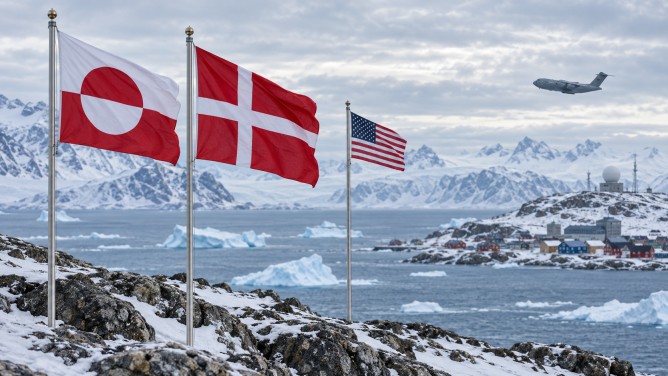
The Arctic’s strategic significance has been brought into sharp focus as Denmark and Greenland clarify the terms of a proposed agreement with the United States, emphasizing that Greenland’s sovereignty and self-determination will remain intact. This follows U.S. President Donald Trump’s announcement of an arrangement granting the U.S. expanded military rights in Greenland, described by him as providing “permanent control” over the island’s security.
Greenland’s Prime Minister Jens-Frederik Nielsen has reassured that the agreement underlines Greenland’s sovereignty and respects the territorial integrity and rights of the Greenlandic people. Concurrently, Danish Foreign Minister Lars Lokke Rasmussen stated the deal could enhance security in the Arctic and North Atlantic regions while upholding Denmark’s conditions regarding Greenland’s autonomy.
The proposed agreement, expected to be officially signed during the upcoming United Nations General Assembly, gives the U.S. the ability to develop a significant military presence on the island. This move aims to prevent adversarial nations from establishing military bases in Greenland. However, specific details about the extent of the U.S. military presence and any potential influence over Greenland’s foreign policy or natural resources remain undisclosed.
Greenland’s location in the Arctic has long been of strategic interest to the United States, which already operates the Pituffik Space Base there. This base plays a crucial role in missile warning and space-related missions. Rising global tensions and the strategic importance of Greenland’s mineral resources and emerging Arctic shipping routes have fueled discussions between the U.S., Denmark, and Greenland.
The North Atlantic Treaty Organization (NATO) has expressed support for the agreement, suggesting it could foster increased security and cooperation in the Arctic region. As the geopolitical landscape evolves, the agreement signifies a concerted effort to address the strategic military interests of the United States while assuaging concerns about territorial sovereignty in Greenland.