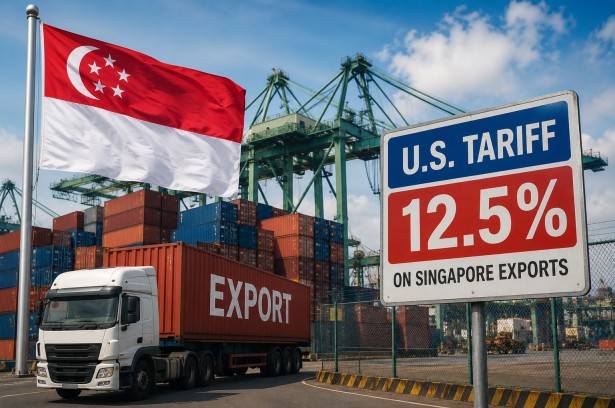
Amid growing concerns over forced labor practices, the United States has announced a new 12.5% tariff on approximately one-third of Singapore’s domestic exports. This move is part of a larger trade policy impacting multiple global economies. Singapore has strongly denied the allegations of forced labor, emphasizing its robust legal framework designed to combat such practices. The country’s Ministry of Trade and Industry has announced plans to engage in continued dialogue with U.S. trade officials to gain a clearer understanding of how these new tariffs will be enforced.
Exemptions to the new tariff have been made for several important export categories. Products such as pharmaceuticals, semiconductors, certain electronics, aerospace items, energy products, and those already subject to specific U.S. tariffs will not be affected by this measure. However, the imposition of these tariffs has raised concerns among business communities about potential disruptions.
Industry groups have expressed worries that the new tariff could heighten uncertainty for manufacturers and exporters, especially given the backdrop of an ongoing U.S. investigation that could lead to further trade restrictions. Business leaders have advised companies to consider diversifying their export markets and to work on strengthening the resilience of their supply chains to mitigate the risks posed by these developments.
As Singapore navigates this challenge, the focus remains on clarifying the specifics of the tariff implementation and addressing the underlying concerns raised by the United States. The discussions between Singapore and U.S. officials will be crucial in determining the future trade dynamics between the two nations and the potential impact on Singapore’s export-oriented economy.