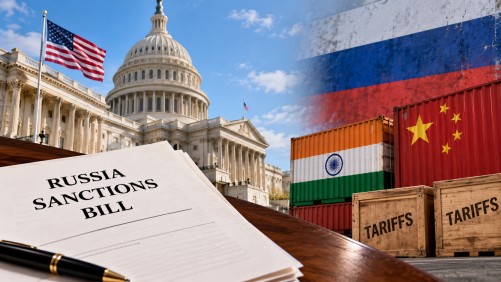
The global geopolitical landscape continues to shift as the United States Congress advances strategic measures aimed at curbing the influence of Russia and Iran. Recently, the U.S. House of Representatives passed the Lindsey O. Graham Sanctioning Russia and Iran Act of 2026, a significant legislative package designed to empower President Donald Trump with the authority to impose severe tariffs on nations persisting in their purchase of Russian oil and natural gas.
Having already cleared the Senate, the bill now awaits President Trump’s decision. It proposes the capacity to levy tariffs as high as 100% on goods from countries engaged in specified activities linked to Russian energy procurement or sanctions evasion. This legislative move targets Russia’s energy and defense sectors, specifically addressing the network of oil tankers deployed to bypass existing sanctions.
The implications of this bill could extend to major energy consumers like India and China, which have continued purchasing Russian energy resources. While the bill does not automatically enforce a 100% tariff, it grants the U.S. president the discretion to do so under certain conditions. India has responded by emphasizing that its energy sourcing strategies are dictated by national interests, a stance that may introduce new complexities to ongoing trade negotiations with the U.S.
Beyond the energy sector, the legislation also broadens the scope of sanctions against Iran and includes new measures targeting Russian officials, financial entities, and those involved in sanctions evasion. This comprehensive approach underscores a concerted effort by the U.S. to intensify economic pressure on two of its significant geopolitical adversaries.
The bill’s passage reflects a continued commitment by U.S. lawmakers to utilize economic tools in addressing international security and policy objectives, reinforcing the strategic posture of the United States on the global stage. As the legislation awaits presidential approval, its potential effects on international trade dynamics remain a focal point for global economic observers.