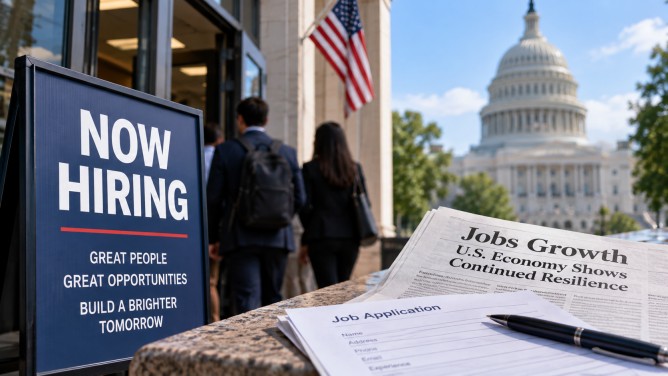
August saw the addition of 162,000 jobs to the U.S. economy, marking a recovery from a sluggish summer labor market. Despite this growth, the unemployment rate held steady at 4.1%. This hiring increase, while above economists’ expectations of at least 50,000 new jobs, follows a period of fluctuating job growth. In March, the economy had a more robust expansion with 214,000 jobs, but the pace slowed significantly to just 21,000 in July. Revised figures for earlier months showed June’s job additions adjusted to 31,000 from an initial 20,000, and July’s numbers were revised from a 23,000-job loss to a 21,000-job gain.
Although August’s job increase shows improvement, the broader labor market still exhibits signs of waning momentum. The private sector contributed only 38,000 jobs in August, reflecting businesses’ cautious approach to hiring. This trend is characterized by what economists term a “slow hire, slow fire” environment, where companies are neither aggressively expanding their workforce nor conducting significant layoffs. Indicators such as steady job openings and layoffs, along with a stable rate of workers voluntarily leaving their positions, suggest employees’ confidence in finding new opportunities remains tepid.
The labor market’s challenges are compounded by ongoing inflationary pressures. Annual inflation in the U.S. climbed from 2.4% in February to 3.4% in July, imposing additional financial burdens on households through increased prices. Concurrently, rising bond yields have sparked concerns over elevated borrowing costs. As Treasury yields rise, consumers face the prospect of more expensive mortgages, car loans, and student debt, adding layers of economic pressure.
The Federal Reserve finds itself in a delicate balancing act between managing inflation and sustaining employment levels. While raising interest rates could help tame inflation towards its 2% goal, such measures risk further dampening the labor market’s already slowing pace. Meanwhile, President Donald Trump has maintained his stance advocating for lower interest rates, arguing that cheaper borrowing could bolster the U.S. economy.