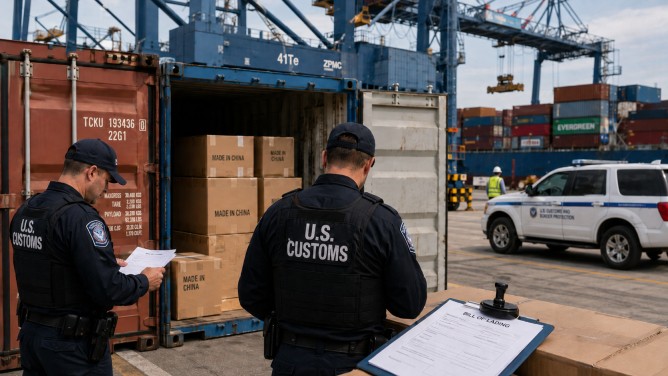
The United States has leveled allegations against 38 countries and the European Union for their involvement in what it describes as a “shadow transshipment network.” This network allegedly facilitates the entry of Chinese goods, which are subject to steep US tariffs, into the American market via third-party countries. The situation is detailed in a report titled “The Great Transshipment Scam,” which estimates the potential value of these possibly illegal transshipments at approximately $60 billion, with significant implications for US tariff revenue losses.
The report outlines a comprehensive list of countries and territories implicated in the network, including India, Canada, the European Union, Israel, Japan, Mexico, South Korea, Taiwan, Brazil, Indonesia, Malaysia, Thailand, Turkey, Vietnam, Argentina, Azerbaijan, Bangladesh, Cambodia, Chile, Colombia, Costa Rica, the Dominican Republic, Georgia, Jordan, Kazakhstan, Kenya, Laos, Morocco, Myanmar, Oman, Panama, Peru, the Philippines, Singapore, Sri Lanka, Switzerland, the UAE, and Uzbekistan. These nations are accused of playing a role in facilitating the entry of Chinese-made goods into the US market, circumventing the intended tariffs.
According to the report, a staggering $67 billion worth of goods bound for the US was allegedly rerouted from China through key locations such as Mexico, India, and Vietnam in the year 2025. This practice is believed to have contributed to an estimated $28 billion shortfall in US tariff revenue, highlighting the economic impact of such transshipment activities.
The report also brings attention to the Pune-Gujarat-Chennai corridor in India, which is purportedly a beneficiary of these shipments. Chinese products, particularly electric pumps and compressors, reportedly find their way through this corridor, enhancing local businesses while simultaneously intensifying competitive pressures on American manufacturers.
In response to these findings, the US is considering a range of actions including tighter inspections and interdictions, the imposition of additional tariffs, sanctions, and possibly restricting market access for countries found to be aiding in tariff evasion. These measures aim to curb the economic impact of the alleged transshipment network and protect US interests.