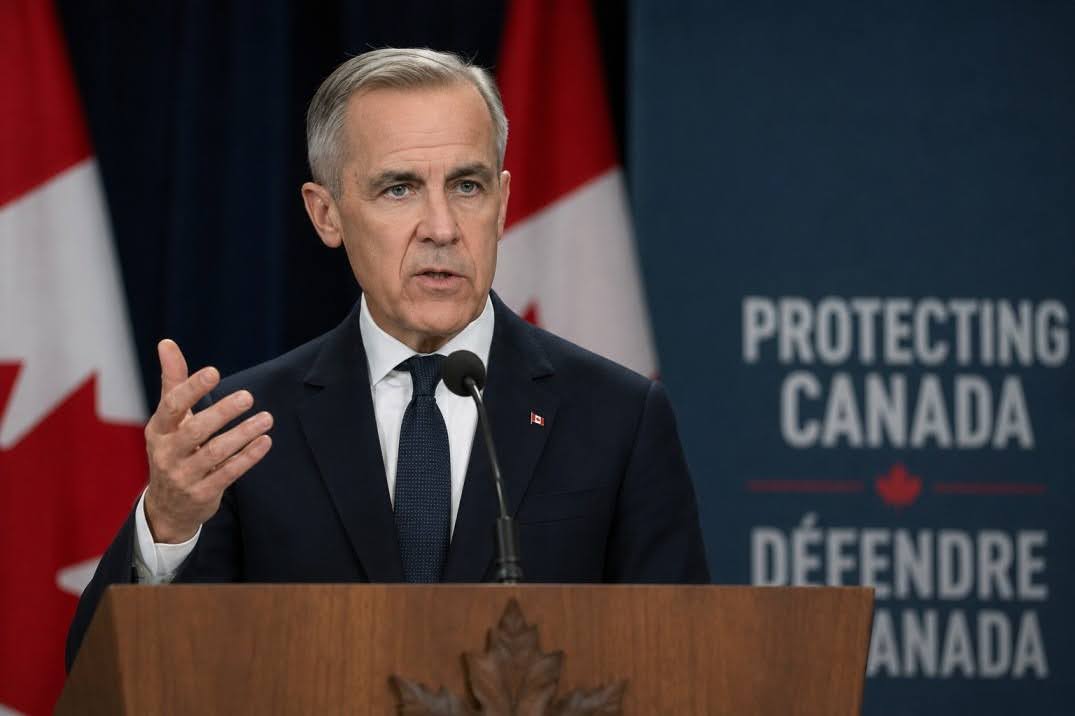
In a sharp rebuke of the Trump administration, Canadian Prime Minister Mark Carney has urged U.S. officials to abandon what he described as derisive behavior and instead engage in serious trade discussions. His comments come just before Canada is slated to implement retaliatory tariffs on American imports. Carney criticized the insults directed at Canada, stating they were unworthy of the offices involved, and stressed that meaningful trade talks could only resume once the U.S. moved away from superficial posturing and memes, focusing instead on substantial negotiations.
The trade tensions between the two countries have been escalating for weeks. A recent decision by President Trump to rename Lake Ontario as “Lake America” was met with widespread disapproval in Canada. Meanwhile, the top U.S. trade negotiator has downplayed these tensions, suggesting that the economic repercussions would be more severe for Canada than for the United States, and noted that no active trade discussions were currently taking place. This dispute follows the failure of trade talks between the U.S. and Canada about a week ago, which led Washington to impose a 50% tariff on $20 billion worth of Canadian exports. In response, Canada, a key trading partner for the U.S., has announced its own $20 billion in tariffs on American goods, set to begin on September 8, affecting consumers in both nations, particularly in terms of everyday products.
The U.S. trade representative attributed the breakdown of negotiations to Canadian demands, such as calls for reduced taxes on heavy-duty trucks, which became a significant obstacle. He questioned Canada’s commitment to reaching a deal and hinted that if Canada restricted American goods and services, the U.S. might take similar actions. In contrast, Canadian officials have depicted a different scenario, pointing to internal disagreements within the White House over leadership roles in the negotiations. Carney also highlighted that American negotiators regarded Canada’s protections for the French language, especially in Quebec, as contentious, though he emphasized these protections are long-established rights.
President Trump has framed the ongoing trade dispute around the notion that Canada seeks the benefits of closer ties with the U.S. without formal integration, accusing Canada of imposing high tariffs on American agricultural products for many years. The U.S. negotiator mentioned there was confusion over the agenda during the talks, expressing uncertainty about whether the breakdown was due to political or economic reasons, but insisted that the realistic choice was never between the current tariffs and completely tariff-free trade.