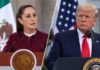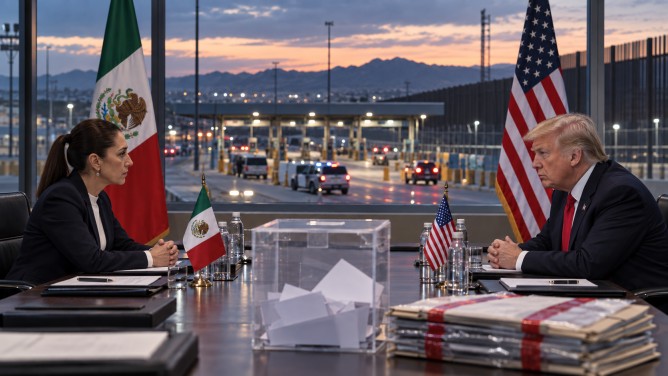
As the political landscapes in both Mexico and the United States become increasingly charged ahead of significant elections, tensions between the two nations are escalating. The U.S., under the Trump administration, has intensified its scrutiny of Mexico’s handling of drug trafficking and corruption, a move that has stirred controversy on both sides of the border.
President Donald Trump has criticized Mexico for insufficient actions to curb the illegal drug trade and for failing to take decisive measures against officials allegedly involved with criminal organizations. This issue has gained prominence in the political discourse as the United States approaches the midterm elections in November, with Trump’s stance influencing the political narrative.
In response, Mexican President Claudia Sheinbaum has firmly defended her country’s efforts to combat organized crime and corruption, while dismissing what she perceives as undue interference by the United States. Sheinbaum’s administration has urged Washington to bolster its efforts against drug distribution, money laundering, and the illegal flow of firearms into Mexico, which they argue exacerbates the issue.
The discord has intensified following U.S. legal actions against certain Mexican officials accused of having ties to organized crime, coupled with the revocation of visas for several Mexican politicians. President Sheinbaum has questioned the motivations behind some of these actions, suggesting they may be politically driven.
Domestically, Sheinbaum’s government has taken proactive measures by targeting suspected criminal networks and pushing for Morena, her political party, to enforce stricter background checks and financial disclosure requirements for candidates. This internal push comes as allegations of “narco-politics” become a focal point in Mexico’s own political debate, with opposition groups leveraging these claims against the ruling party ahead of the 2027 elections.