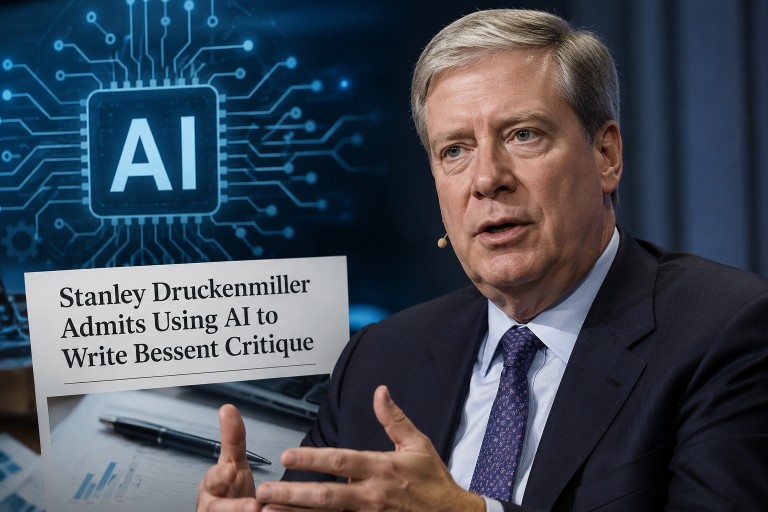
In a notable admission, billionaire investor Stanley Druckenmiller has shared that he utilized artificial intelligence to craft an opinion piece aimed at critiquing US Treasury Secretary Scott Bessent’s strategy regarding the bond market. Despite employing AI technology, Druckenmiller emphasized that the core ideas and arguments presented in the article were entirely his own. He expressed satisfaction with using AI as a tool to aid in writing, underscoring that the technology served merely to enhance his expression rather than define it.
The publication that featured Druckenmiller’s article stood by its decision to include the piece, highlighting that the primary concern was whether the author’s original insights and arguments were faithfully conveyed. This stance brings to light the ongoing conversation around the role of AI in journalism and opinion writing, especially as it pertains to the issues of authorship and transparency.
The use of artificial intelligence in the creation of written content has spurred a broader discussion within the media industry. As AI tools become increasingly sophisticated, questions arise about the implications for editorial standards and the integrity of authorship. Druckenmiller’s revelation adds a significant voice to this debate, prompting reflections on how technology can be integrated into traditional writing practices while maintaining authenticity.
As the discourse continues, the integration of AI in journalistic practices remains a contentious topic. Proponents argue that AI can serve as a valuable resource for enhancing productivity and creativity, while critics caution against the potential erosion of human originality and oversight. Druckenmiller’s experience offers a real-world example of these dynamics at play, illustrating both the potential benefits and challenges that accompany the use of AI in crafting opinion pieces.