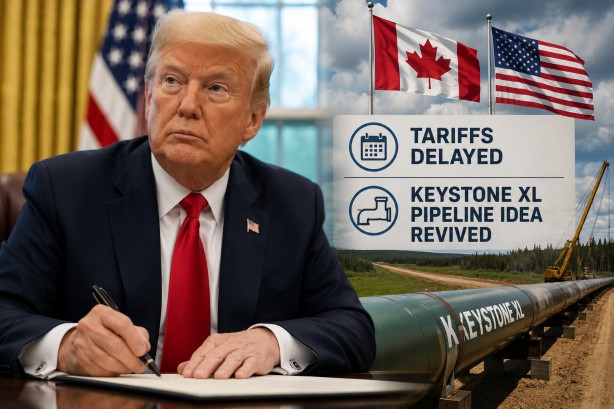
President Donald Trump has announced a three-day postponement on the imposition of a 50% tariff on Canadian goods, a decision he attributes to advancements in trade talks between the United States and Canada. While Trump expressed optimism about the nearing completion of a deal, Canadian Prime Minister Mark Carney acknowledged significant progress but emphasized the necessity for further discussions to finalize the agreement. The delay offers both nations additional time to work out the final details of the proposed trade arrangement.
The tariffs, if implemented, could impact billions of dollars in Canadian exports, targeting a range of products such as wine and hockey equipment. The temporary reprieve is a welcome development for Canadian businesses concerned about the potential escalation in costs and the possibility of diminished access to the extensive U.S. market. The ongoing negotiations underscore the economic interdependence of the two countries, which engage in substantial trade activities, exchanging hundreds of billions of dollars in goods and services annually.
Amid these trade discussions, President Trump hinted at the possible revival of the Keystone XL oil pipeline project, suggesting it might “be awoken from the grave.” Although he did not elaborate on how the pipeline might relate to the trade negotiations, the project has been a longstanding point of contention. Originally intended to transport oil from Canada’s western regions to U.S. refineries, Keystone XL faced significant opposition from environmentalists, landowners, and Indigenous groups, leading to its cancellation when a critical U.S. permit was revoked in 2021.
The latest developments come after a period of tense relations between the U.S. and Canada, characterized by frequent threats of tariffs and retaliatory trade measures. These tensions have prompted concern among Canadian industries about the potential impact on their economic ties with the U.S. As both countries continue to navigate the complexities of their trade relationship, the temporary tariff delay represents a momentary easing of the strain that has marked recent interactions between the two North American neighbors.