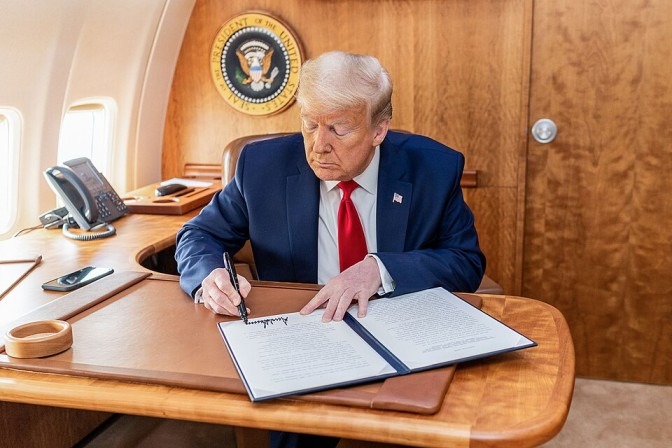
In a move aimed at bolstering national security and cybersecurity, President Donald Trump has introduced an executive order to establish a new voluntary framework. This initiative is designed to encourage technology companies to collaborate with the U.S. government by sharing their advanced artificial intelligence models before public release. The framework is intended to allow federal agencies the opportunity to assess these powerful AI systems prior to their deployment, thereby enhancing the nation’s preparedness for potential cybersecurity threats.
The framework allows companies to voluntarily submit their AI models for government review, which can take place up to 30 days before they are launched to the public. Unlike a mandatory approval process, this order does not impose requirements for government licensing or approval of AI products, reflecting the administration’s effort to strike a balance between fostering technological innovation and addressing security concerns. The collaborative review process will involve key federal agencies such as the National Security Agency, the Department of Defense, and the Treasury Department, which will work alongside AI developers to evaluate potential risks and benefits of government oversight.
Amid growing concerns over the misuse of advanced AI systems, particularly in the realms of cybersecurity, national defense, and the protection of critical infrastructure, the executive order aims to address these risks without hindering technological progress. Although some policymakers have advocated for more stringent oversight, the administration has opted to avoid regulatory measures that might impede innovation. The overarching goal is to ensure that the United States maintains its leadership in artificial intelligence, even as it navigates the emerging challenges posed by this rapidly evolving technology.
As part of the broader effort to enhance federal involvement in AI safety and security, the executive order also mandates a strengthening of cybersecurity capabilities within government agencies. This includes expanding the use of AI-powered defensive tools and boosting recruitment efforts for AI and cybersecurity professionals. The order emphasizes the need to protect government information systems and critical infrastructure sectors, signaling a commitment to safeguarding these vital areas against potential threats.
This initiative marks a significant shift towards increased federal engagement in the realm of AI safety while maintaining a focus on innovation. By encouraging voluntary collaboration between the government and technology companies, the administration seeks to proactively address security risks without stifling the potential of artificial intelligence to drive progress in various sectors.